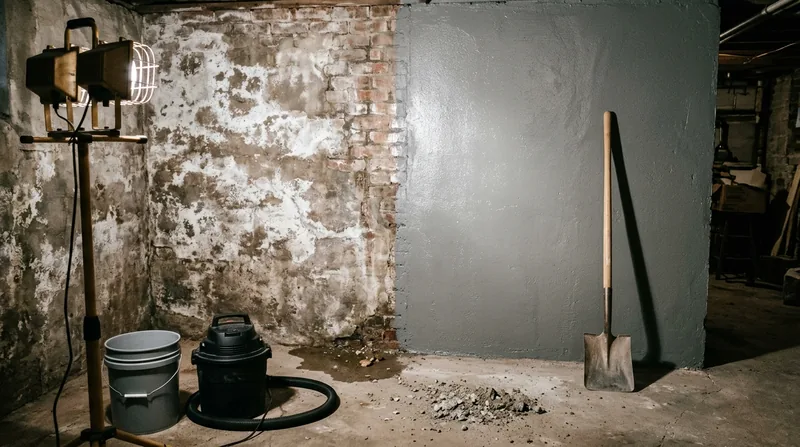




Norfolk sits barely above sea level on sandy and silty Tidewater soil over clay, and the water table runs just a few feet down. That means the brick townhomes of Ghent, the raised-foundation Tudors in Larchmont and Riverview, and the slab-on-grade ranches out in Wards Corner all fight the same enemy: water pushing against the foundation after a hard rain. Basement Wall Sealing in Norfolk is the first line of defense for damp lower-level walls, and we do it honestly. Sometimes a penetrating sealer and proper surface prep solve the problem. Sometimes the wall is telling you the real issue is hydrostatic pressure, and a sealer alone will fail. We tell you which one you have before we touch a wall. If you want the full picture of how sealing fits into a complete water-management plan, start with our basement waterproofing service.
Why Wall Sealing Matters in Norfolk's Old Brick and Raised-Foundation Homes
Most Norfolk houses do not have a full basement, so the work is concentrated around slab edges, raised brick walls, and the partial cellars under some of the older Ghent and Colonial Place homes. Those 1900s brick walls wick moisture, and after a nor'easter or a summer downpour you get wall seepage, chalky efflorescence, and a musty basement smell that never quite leaves. Sealing a damp wall stops the surface wicking and gives you a clean, paintable surface, but it is not a cure for water that is being pushed in under pressure.
- We remove efflorescence and loose parging before any sealer goes on, because a sealer over chalk is wasted money.
- We check for active seepage and crack movement, since sealing a moving crack just hides it for a season.
- We test for hydrostatic pressure and a high water table, which no surface sealer can hold back.
- We recommend a penetrating sealer for damp masonry and a membrane for walls that stay wet to the touch.
- We tell you plainly when an interior perimeter drain is the better answer than another coat of sealer.
That last point matters most. In a city where the Lafayette and Elizabeth rivers push water against foundations during tidal flooding, sealing is a maintenance step, not a substitute for drainage.
Key info: A 1920s brick cottage in Riverview had efflorescence halfway up the raised wall and a musty smell after every storm. The sealer we applied stopped the surface wicking, but the seepage at the slab edge only stopped once we tied the wall into an interior drain. Two different problems, two different fixes.
For the official word on what requires a permit when drainage or structural work is involved, check the City of Norfolk building department before you schedule anything.
How We Seal a Basement Wall in Norfolk, Step by Step
We start by finding out why the wall is wet, not by opening a bucket of sealer. On a slab-on-grade ranch in Azalea Acres or a raised-wall Tudor in Lochhaven, that means walking the perimeter, checking grading and downspout extension, and looking at the wall itself for efflorescence, hairline cracks, and bowing. Then we prepare the surface properly, because the sealer is only as good as what is under it.
- We inspect the wall and the exterior grade, and we note any crack that needs epoxy or polyurethane injection first.
- We wire-brush and scrape the wall, removing efflorescence, old paint, and loose parging down to sound masonry.
- We fill voids and honeycombed mortar so the sealer has a continuous surface to bond to.
- We apply the penetrating or membrane sealer in the correct number of coats for the wall's condition.
- We correct grading and downspout extension so roof water is carried away from the footing.
- We hand you a written note on what we found and what to watch for after the next big rain.
If the inspection turns up a wet slab edge or a sump pit that cannot keep up, we will say so and point you to the right fix rather than sell you another coat of sealer.
Key info: A bungalow in Ocean View had a damp wall and a downspout that dumped right at the corner of the foundation. Sealing the wall without moving that downspout would have been a waste. We extended the discharge line, corrected the grade, and sealed the wall, and the dampness stopped.
Sealing often works best as part of a broader plan. If the wall is wet because the footing drain is clogged or the sump pump is undersized, our interior drain tile system is the honest answer, and we will tell you when that is the case.
Sealing Methods We Use and When Each One Fits
Not every damp wall needs the same product. A 1940s brick ranch in Wards Corner with surface dampness is a different job from a Ghent townhome with a cellar wall that stays wet year-round. Here is how we match the method to the wall.
| Approach | Description | Best for |
|---|---|---|
| Penetrating sealer | Soaks into the masonry and blocks capillary wicking without trapping moisture. | Damp brick and block walls with efflorescence but no standing water. |
| Membrane sealer | A flexible coating that bridges hairline cracks and resists moderate seepage. | Walls that stay wet to the touch and show fine surface cracks. |
| Crack injection first | Epoxy or polyurethane injection seals an active crack before any coating goes on. | Walls with a visible, leaking crack that moves or seeps after rain. |
| Drainage correction | Grading, downspout extension, and footing drainage to relieve hydrostatic pressure. | Walls where water is being pushed in under pressure, not just wicking. |
| Interior perimeter drain | A drain tile system that captures water at the slab edge and sends it to a sump basin. | Persistent seepage at the wall-floor joint that sealing cannot hold. |
The right method depends on the wall, the soil, and how the water is getting in. We will not sell you a sealer for a pressure problem.
Basement Wall Sealing Cost in Norfolk: What to Expect
Most residential wall sealing jobs in Norfolk start around $1,500, and that figure covers surface preparation, efflorescence removal, and the sealer itself on a typical wall run. The number moves with the size of the wall area, the condition of the masonry, and how much prep the wall needs before any product goes on. A chalky, painted-over wall in an old Ghent cellar takes more labor than a clean block wall in a newer Chesapeake townhome.
Access is the other big factor. A raised brick foundation wall in Larchmont with a narrow side yard and mature crape myrtles against the house is a slower job than an open slab edge. If the inspection turns up active cracks or a high water table, the scope grows, and we tell you that up front rather than after the fact. Getting two or three estimates is smart, and any contractor who quotes you a sealer without looking at the wall is guessing.
For a fuller breakdown of what different scopes run in this market, see our pricing overview.
Basement Wall Sealing Near Me: How to Choose a Contractor Near Norfolk
When you search for basement wall sealing near me, the list of names can look the same. The difference is in what they do before they quote. A contractor who inspects the wall, checks the grading, and explains the difference between dampness and hydrostatic pressure is worth more than one who promises a sealer will fix everything. Here is what to check before you sign.
- Confirm the contractor is licensed and insured for below-grade work in Virginia, and ask for the certificate.
- Get two or three written estimates so you can compare scope, not just price.
- Ask for local references, ideally from homes similar to yours in age and foundation type.
- Ask who pulls any permit, since structural or drainage work may require one from the local building department.
- Check HOA rules if you live in a townhome block, since exterior drainage changes may need approval.
We are happy to walk you through what we find and put it in writing. Reach out through our contact page to set up an inspection.
When Sealing Is Not Enough: Reading the Signs on a Norfolk Wall
Sealing solves surface dampness and efflorescence. It does not solve water that is being pushed through the wall by a high water table or by saturated Tidewater soil after a nor'easter. If you see water running at the wall-floor joint during rain, or if the wall is bowing, the honest answer is drainage or structural repair, not another coat of sealer. We check for bowing and for active seepage on every inspection, and we will tell you when the wall needs more than a coating.
That is the whole point of calling a specialist. We do basement and foundation work only, and we would rather tell you the truth about your wall than sell you a sealer that will not hold. Call (757) 698-3671 to schedule an inspection.
Basement Wall Sealing in Norfolk: Pricing Guide
| Service | Price | Details |
|---|---|---|
| Single wall sealing, standard prep | Starting at $1,500 | Includes efflorescence removal, surface prep, and one penetrating or membrane sealer coat on a typical wall run. |
| Full perimeter sealing with crack prep | Starting at $2,400 | Covers all accessible walls plus void filling and prep; wall condition and total square footage move the price. |
| Sealing plus crack injection | On estimate | Needed when active cracks must be injected before sealing; scope depends on crack count and movement. |
| Drainage correction add-on | On estimate | Grading, downspout extension, or footing drainage added when hydrostatic pressure is the real problem. |
| Travel | Included | in Norfolk and surrounding areas, no separate call-out or mileage fee |
| Estimate | Free | Response within 24h at (757) 698-3671, no obligation to book |
Indicative pricing, the exact cost depends on square footage, finish, and site access. Free personalized estimate within 24h at (757) 698-3671.


